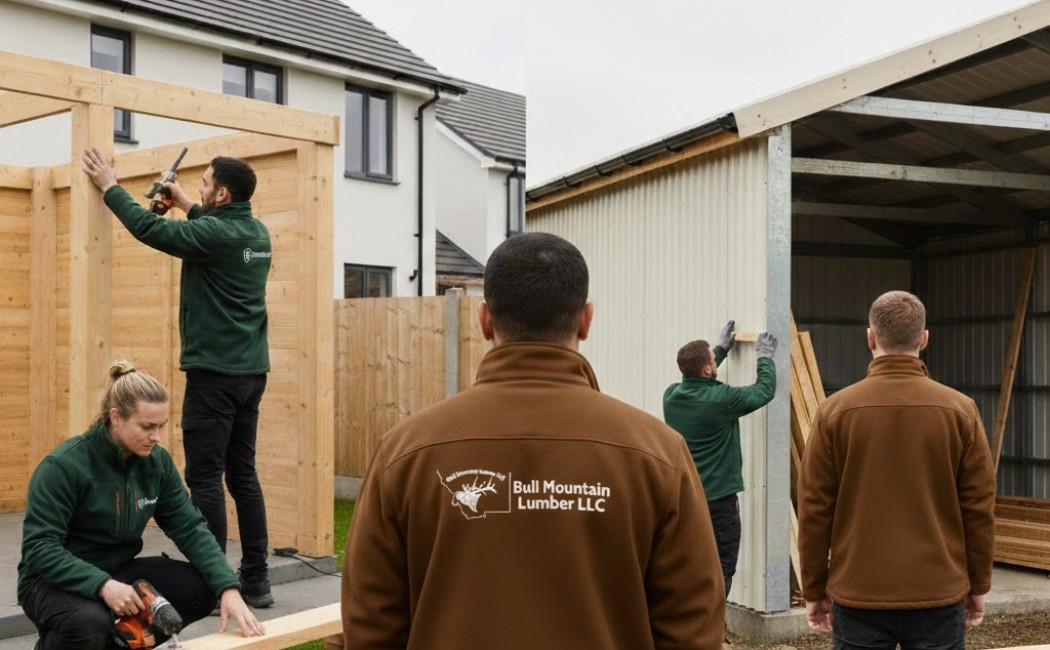
Constructing a shed does not have to be a time-consuming or complex project. Post-frame lumber sheds can be constructed in 48 hours with the right materials, planning, and techniques, with small crews and an experienced DIY builder.
Post-frame construction is an affordable and quick method of building a reliable storage facility that can be used in residential, agricultural, or commercial settings.
In this guide, we will walk you through a quick shed framing guide that explains how to build a shed in 48 hours, covering preparation, layout, wall framing, and roof structure using proven post-frame methods.
What Makes Post Frame Lumber Sheds So Special?
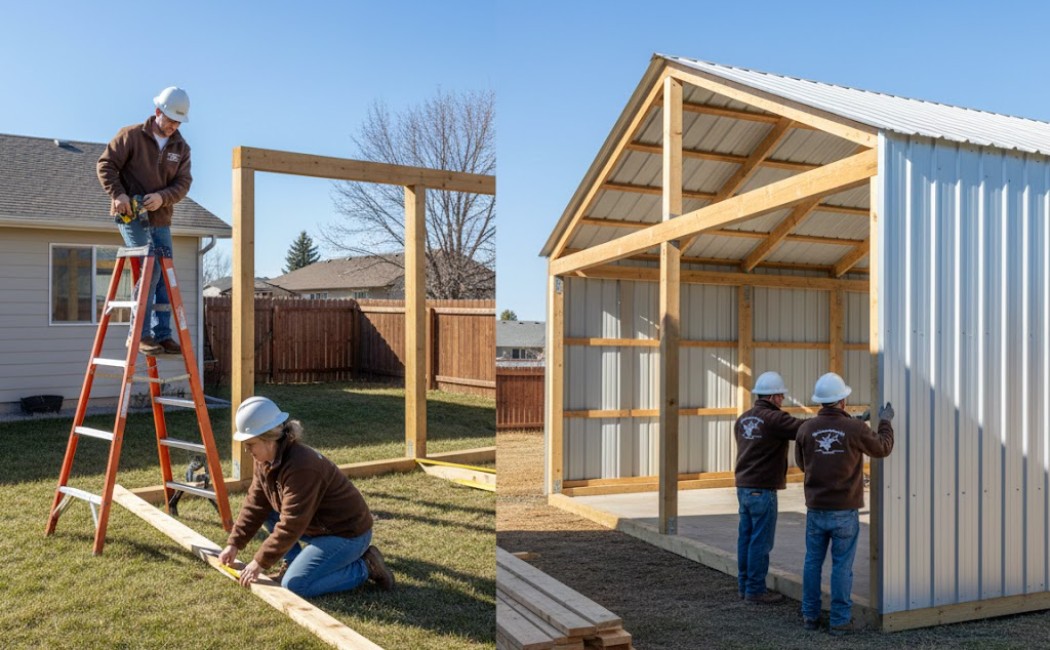
In post-frame construction, huge vertical posts are laid into the ground or placed on piers without a continuous foundation. This method saves on the cost of materials, labor, and preparation of sites.
Benefits of Post Frame Lumber Sheds include:
- Faster Construction than stick-built sheds.
- Lightweight high-density support.
- Adjustable interior design with increased clear spans.
- Very good performance in extreme temperatures.
- Reducing the total construction expenditure.
These benefits have seen post-frame systems being the quickest to frame a shed without any strength or durability loss.
Material and Tools You Need
Before starting the fast lumber shed construction, it is preferred to keep tools and materials ready all at once. It will save you time during construction and will also allow you to meet your 48-hour target.
Materials
Pressure-treated posts (6×6 or 4×6)
These are the uprights of your shed. Pressure-treated wood resists rot, insects, and moisture, and therefore it is ideal in the case of posts that will partly be buried or be exposed to the elements. Depending on the height of the shed and the loads on it, the size (6×6 or 4×6) is determined.
Girt and truss dimensional lumber.
Horizontal girts between posts are made of dimensional lumber and put in place to support walls and siding. It is also used in trusses, which are the principal structure of the roof. Application of well-cut and measured lumber facilitates straight walls and a stable roof.
Post setting- concrete/gravel.
The posts are anchored to the ground with concrete, which ensures that they do not move over time. The drainage and stabilization of posts can also be made with gravel. This will vary because of the type of soil, climatic conditions, and the size of the sheds.
Metal fasteners and connectors.
These contain brackets, nails, screws, and other hardware that hold posts, beams, and trusses. The high-quality fasteners will provide a tight frame that can resist the wind and weight.
Roof trusses or rafters
The skeleton of the roof is made up of trusses or rafters. They hold the roofing materials and assist in distributing the weight equally on the shed frame. Ready-made trusses are able to save time over their construction at the site.
Framing:
Sheathing or metal siding (can be decided upon at the framing stage). The wall protection is constituted by sheathing (plywood or OSB boards) or metal siding on the frame. Although it is optional in the initial framing, it is easily installed soon after the framing to protect the structure against the weather.
Tools
Post hole auger or digger
Raised to excavate holes in the vertical posts. A post hole auger makes the process quicker and has a consistent depth that is required for a level structure.
Circular saw
Used to cut lumber to the length needed to fit as posts, girts, trusses, and other framing pieces. A keen saw will give straight and clean cuts and minimise mistakes.
Level and framing square
A level is used to make sure that posts, walls, and beams are either straight up or straight down. The framing square can be used to make the right angles at corners, at 90 degrees, a requirement of a square, stable shed.
Impact driver and power drill.
These are devices that push screws and bolts into the posts and beams in a rapid and effective manner. They are a lot faster than a manual screw driver, particularly on pressure-treated lumber.
Measuring tape and chalk line.
The correct measurements are a source of quick and precise construction. Chalk line assists in drawing straight lines between posts and beams; it becomes easy to align walls, trusses, and roof elements.
Day 1: Planning, Posts, and Framework.
Step 1: Site Layout and Marking
Clear and level off the site. Measure the shed footprint with the help of stakes and lines of string. Measures square corners twice–time wasted here will be saved later.
The first plan will be the basis of an effective lumber shed construction.
Step 2: Dig and Set Posts
Locate the post holes, depending on the size and distance of your shed (usually 8-12 feet). Place concrete/compacted gravel posts, which are straight and flat.
This is the key stage in the construction of pole-frame lumber since the posts support the majority of the load.
Time-saving trick: Put posts in place, cut to the right height.
Step 3: Girts and Header Beam Installation.
After preparing posts, cure them to a level where they are working with and then place horizontal girts between the posts. These offer wall support and attachment of framing.
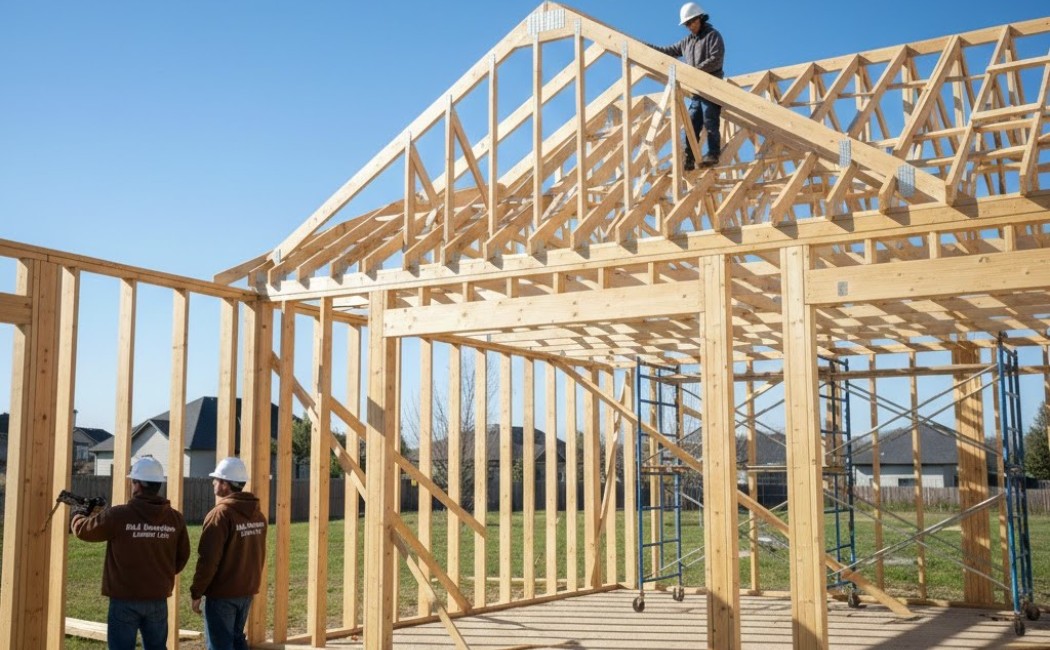
Attach header beams to the top of the posts in order to support roof trusses. Your shed’s structural skeleton must be finished at the end of the first day.
Day 2: Wall Framing and Roof Structure.
Step 4: Wall Framing for a Shed
Post-frame sheds do not need the full stud walls as compared to conventional framing. Rather, girts are framing and siding support.
- For doors and windows:
- Frame openings that are filled with other lumber.
- Strengthen edges and areas of stress.
Make sure that there is enough spacing between future installations.
Wall framing also enables a shed to be built efficiently, thus aiding in quicker completion of the siding and interior after completion.
Step 5: Lay Roof Trusses/ Rafters.
Install a roof truss on already measured spacing (normally 4-8 feet). Fasten them by use of metal brackets or hurricane ties.
This step is a major step towards the direction of creating a shed in 48 hours because when the roof framing is done, the structure is already ready to endure the weather.
Step 6: Add Purlins and Bracing
Install roof purlins at right angles to trusses, to take a metal roof overlay or sheathing. Install diagonal bracing at the position where the stability is poor.
Here, the shed structure is finished and is now ready to be roofed and sided.
- Advice on Rapid and Effective Shed Framing.
- Pre-order cut-to-size lumber
- Act on post-frame plans that are speedy.
- Can work with a small crew that is organised.
- Materials for stages near the location.
- Adhere to a rigid building timetable.
Such plans are sure to make the lumber shed construction fast and without compromising quality.
About Bull Mountain Lumber LLC
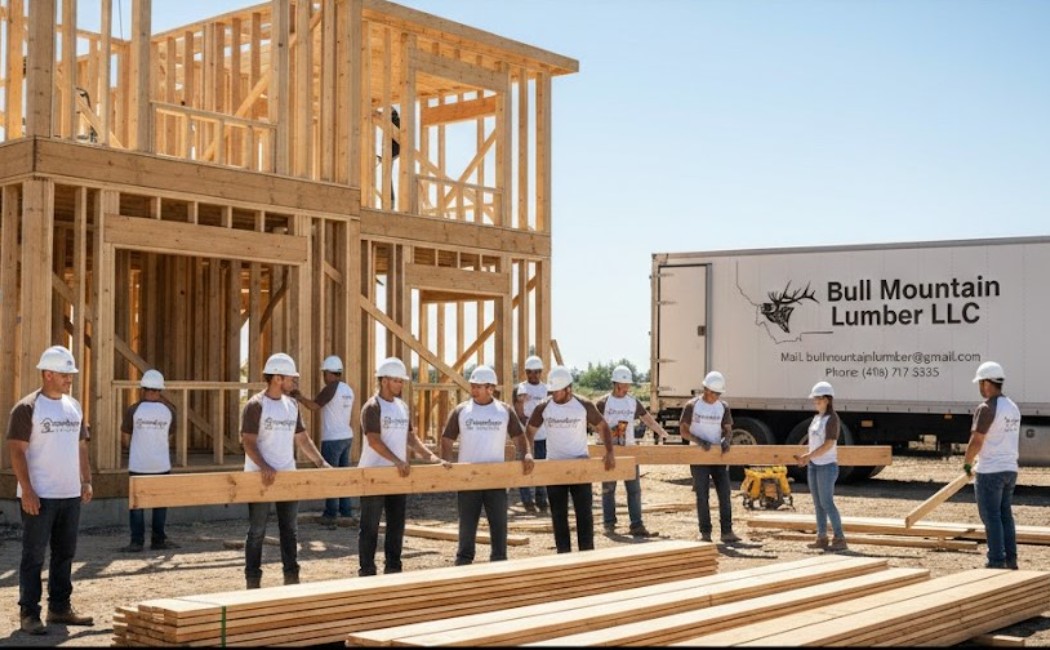
Bull Mountain Lumber LLC is the trusted and reliable pole frame lumber shed company that is affordable and provides durable results professionally. Having years of experience in the industry and high-grade lumber, we specialize in high-quality post-frame solutions based on the requirements of residential, agricultural, and commercial. Our sheds are a combination of custom designs and fast and reliable construction.
Conclusion
Framing a shed in just two days is absolutely achievable with the right approach. By choosing Bull Mountain Lumber LLC for post-frame lumber sheds, construction, you can reduce construction time, lower costs, and still create a strong, long-lasting structure. From setting posts to completing roof framing, we use post-frame methods that offer the fastest way to frame a shed while maintaining professional-grade results. Book an appointment with us today for fast, trusted, and functional post-frame construction.
FAQs
Can I really build a shed in 48 hours?
Yes. It is also feasible to erect a shed in 48 hours with proper planning, materials available on site, and using post-frame means.
Which shed is best for expedited construction?
The most suitable ones are small to mid-sized sheds (12×16, 16×20, or 20×24) that can be quickly built with the assistance of post-frame systems.
Does the frame construction post-framing support heavy loads?
Absolutely. Pole frame lumber construction has been widely applied in the construction of barns, workshops, and commercial buildings because of its strength and durability.
Are the post-frame sheds required to be set on concrete?
No. They are based on inbuilt posts or piers, and this makes it cheaper and faster to construct.
Is it necessary to engage professionals in post-frame sheds?
To ensure quality assurance, code compliance, and long-term serviceability, it is highly advisable to deal with such specialists as Bull Mountain Lumber LLC.